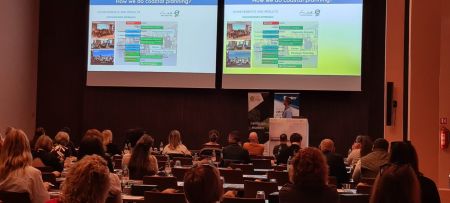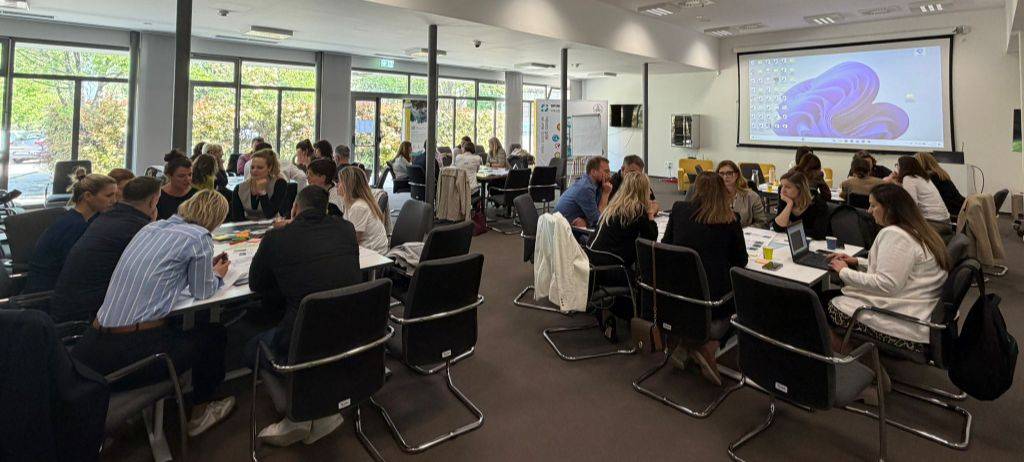
The second regional workshop of the DesirMED project, titled “From vision to implementation – climate resilience of the Kaštela Bay”, was held in Split on 17 April 2026. The event brought together 28 key stakeholders and 12 project partners to further develop solutions for strengthening climate resilience in one of the Mediterranean’s most vulnerable coastal areas.
Organised by Split-Dalmatia County, Sunce, PAP/RAC and the Faculty of Civil Engineering, Architecture and Geodesy of University of Split, the workshop builds on an ongoing participatory process to design and implement nature-based solutions (NbS) for climate adaptation under the DesirMED project, funded by the Horizon Europe.
Participants addressed the complex pressures affecting Kaštela Bay, including flooding, coastal erosion, rising temperatures, ecosystem degradation and impacts on water quality. As a pilot area, the Bay serves as a testing ground for solutions applicable across the Mediterranean.
Building on the vision developed during the first workshop, discussions focused on translating strategic objectives into concrete actions. Interactive group work enabled participants to map NbS options directly onto the territory, identifying both priority measures and implementation barriers. Proposed solutions included the creation of coastal buffer zones with permeable surfaces and tree planting to reduce flooding and urban heat effects; deployment of natural and artificial reefs, protection and restoration of seagrass meadows; etc.
The workshop reaffirmed the importance of cross-sectoral cooperation and participatory planning in advancing climate resilience, moving from vision to actionable pathways for sustainable coastal management.